
July 29, 2026 · 9 min read
From reactive to proactive — the autonomous wildfire first response network
What we are building in parallel with EleHalo: satellites, sensors and autonomous drones that find a fire within minutes and start containing it before the first truck arrives.
EleHalo exists because of a simple imbalance. A wildfire needs minutes to reach a house, and conventional response needs hours to reach the fire. Everything we sell today is an answer to that gap at the level of a single property: keep the roof, the edges and the perimeter damp so the embers that arrive first have nothing to work with. It is a good answer, and it is still a defensive one.
In parallel we are building something considerably bigger, and it points the other way — at the fire itself, in the window where it is still small. We call it an autonomous wildfire first response network, and its purpose is to move wildfire management from reactive suppression to proactive containment.
Detection comes first, and it comes from combining sources rather than trusting any single one. Satellite imagery, AI-powered smoke detection, weather data, IoT sensors in the landscape and fixed camera towers are fused into one continuously updated picture. Each source on its own produces false positives — a dust plume, a warm rock face, a farmer's burn-off. Together, and weighted by an AI model that has seen millions of ignition patterns, they can flag a genuine wildfire within minutes of ignition rather than within the hour it usually takes for a human to call it in.
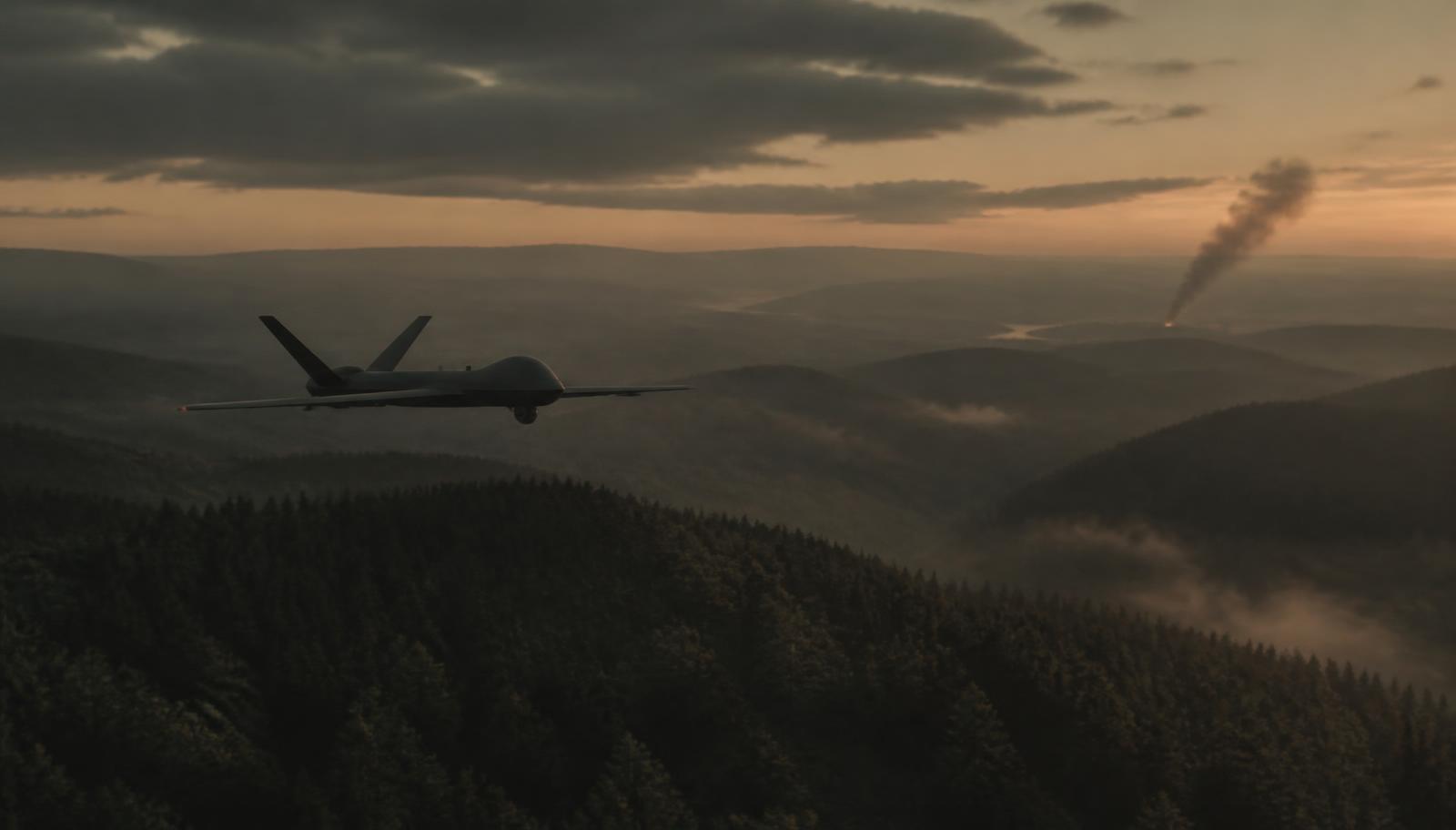
Verification comes second. A high-speed reconnaissance drone is dispatched automatically to the coordinates, without waiting for anyone to approve the launch. It confirms whether there is a fire at all, maps the perimeter with thermal and optical sensors, reads the wind at altitude, and reads the terrain the fire is about to move into. Within a few minutes of arrival it has produced a real-time intervention strategy: where the fire will run, which flank matters, and what needs to be hit first.
Suppression runs in parallel rather than in sequence. Multiple autonomous suppression drones launch from distributed hubs positioned across the landscape, and they deliver precisely targeted fire retardant to the points the reconnaissance drone identified. The goal is not to put the fire out. The goal is to slow it, hold a flank, and buy time — so that when conventional firefighters arrive they arrive at a fire that is still small, and they arrive with a complete operational picture rather than a phone call and a smoke column.
The suppression payload is deliberately dull. Each drone carries a pod: a lightweight shell, a reservoir of flame-retardant liquid, a release valve and a standard mounting bracket that fits ordinary off-the-shelf airframes. Pods are cheap enough to treat as consumables, small enough that a single hub can hold dozens, and simple enough to refill in the field without tooling. There is no bespoke aircraft and no proprietary connector — the whole design assumption is that the flying part is a commodity you can buy today.
Where the pods go matters more than how many are dropped. Two patterns cover most ignitions: direct drops onto a young fire while it is still a few hundred square metres, and a line of drops laid ahead of it, across the path the spread model says the fire will take within the next twenty to thirty minutes. Retardant placed in the way of a fire works on ground that has not been heated yet, which is precisely where a small volume of liquid does the most work. It is the same logic as pre-wetting a roof, applied at landscape scale.
We are deliberately not building proprietary drones. Off-the-shelf drone platforms are already good, already certified, already improving faster than any single company could match. What sits on top of them is ours: a proprietary AI command-and-control platform that decides what launches, where it goes, what it carries and what it does when it gets there. Hardware is a commodity; orchestration is not.
That approach is shaped directly by the operational lessons of Ukraine. Distributed assets rather than a few expensive centralised ones. Modular hardware that can be repaired, swapped and upgraded in the field. Continuous software improvement shipped in weeks rather than procurement cycles measured in years. A network of many cheap, replaceable units consistently outperforms a small number of irreplaceable ones — in war, and in fire.
The real competitive advantage is not the drones at all. It is a digital twin of wildfire behaviour: a simulation environment where millions of AI-generated fire scenarios run continuously against varied terrain, fuel loads, weather and asset placements. Every simulated fire trains the system — improving detection thresholds, dispatch timing, suppression tactics and where the hubs should physically be. By the time a real fire starts, the network has already fought something very like it many thousands of times.
Commercially this becomes Wildfire Protection as a Service. Governments, utilities, insurers and critical infrastructure operators subscribe to coverage over a defined area rather than buying and staffing equipment. The economics work because the alternative is worse: response time is the single strongest predictor of final fire size, and final fire size drives damage, insurance loss and suppression cost. Cutting the first hour down to the first ten minutes changes the entire curve.
None of this replaces what we ship today. A network like this reduces how many fires reach the wildland-urban interface; it does not guarantee that none will. When one does, the house still has to defend itself for the minutes that matter, which is exactly what EleHalo is designed to reduce ignition vulnerability for — helping pre-wet vulnerable exterior surfaces, helping suppress landed embers and low-intensity spot fires, and adding an active layer to defensible space and home hardening.
One system protects the building. The other protects the landscape around it. We are building both because the gap between ignition and response is where houses are lost, and it needs closing from both ends. Our mission page has the short version, including blueprint drawings of the network, the pod assembly and how drops are planned.
Related articles
Safety practice and how the system itself is put together.
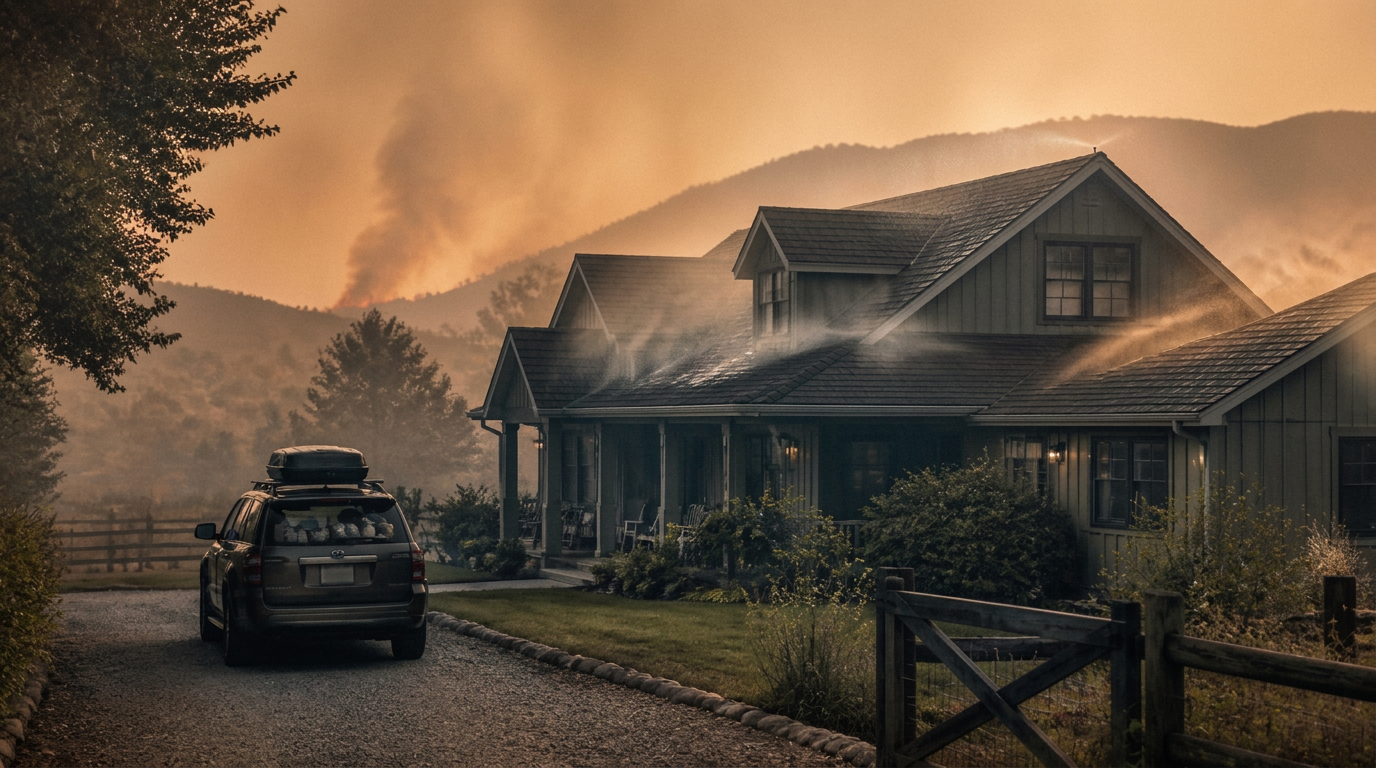 Safety first — with or without a systemNo roof-wetting system can guarantee survival. These six rules reduce your risk regardless of what you have installed.5 min read
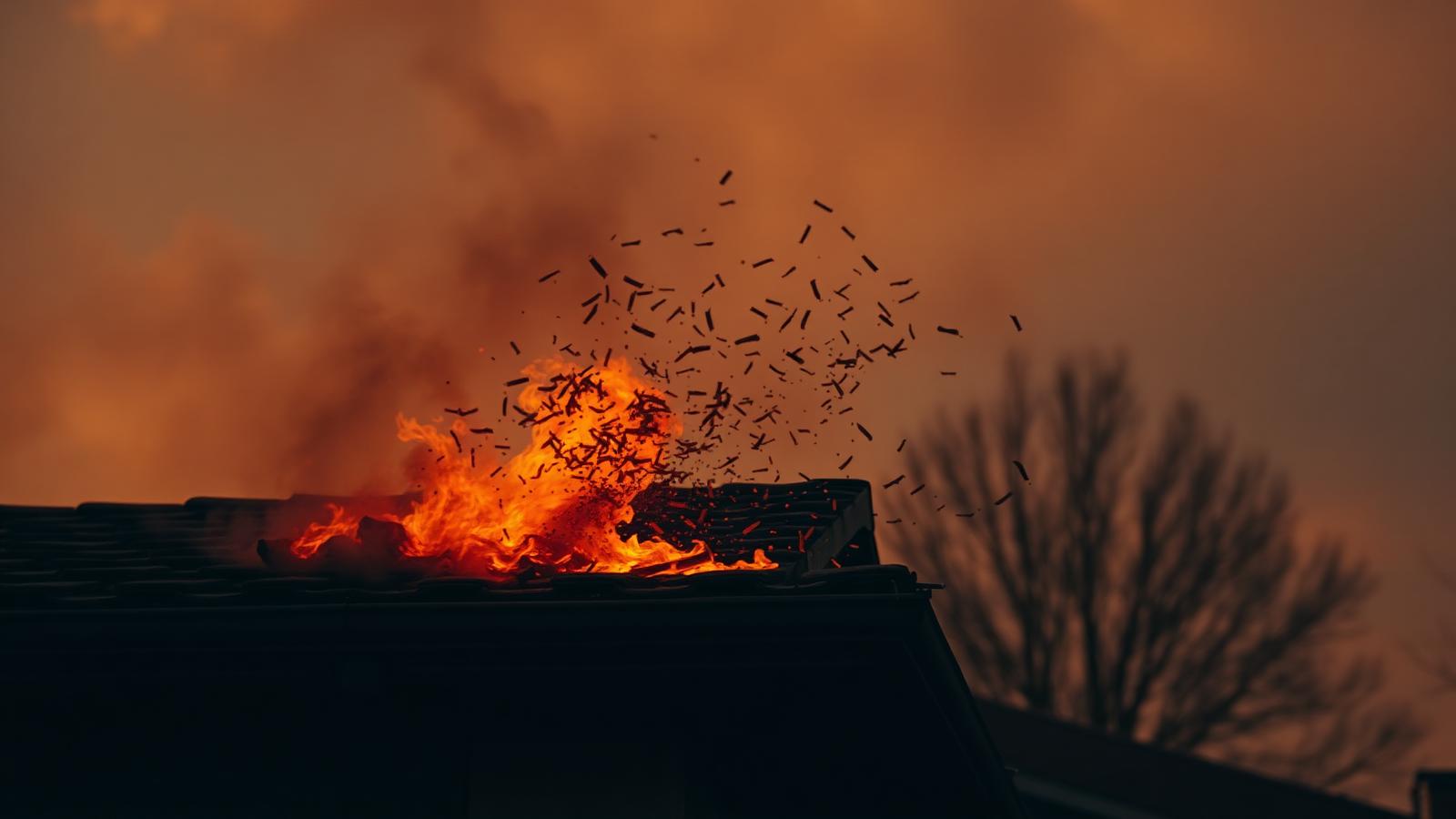 Why embers, not flames, take most housesThe fire front usually passes in under two minutes. The ember shower before and after it lasts hours — and that is what finds your gutters.6 min read
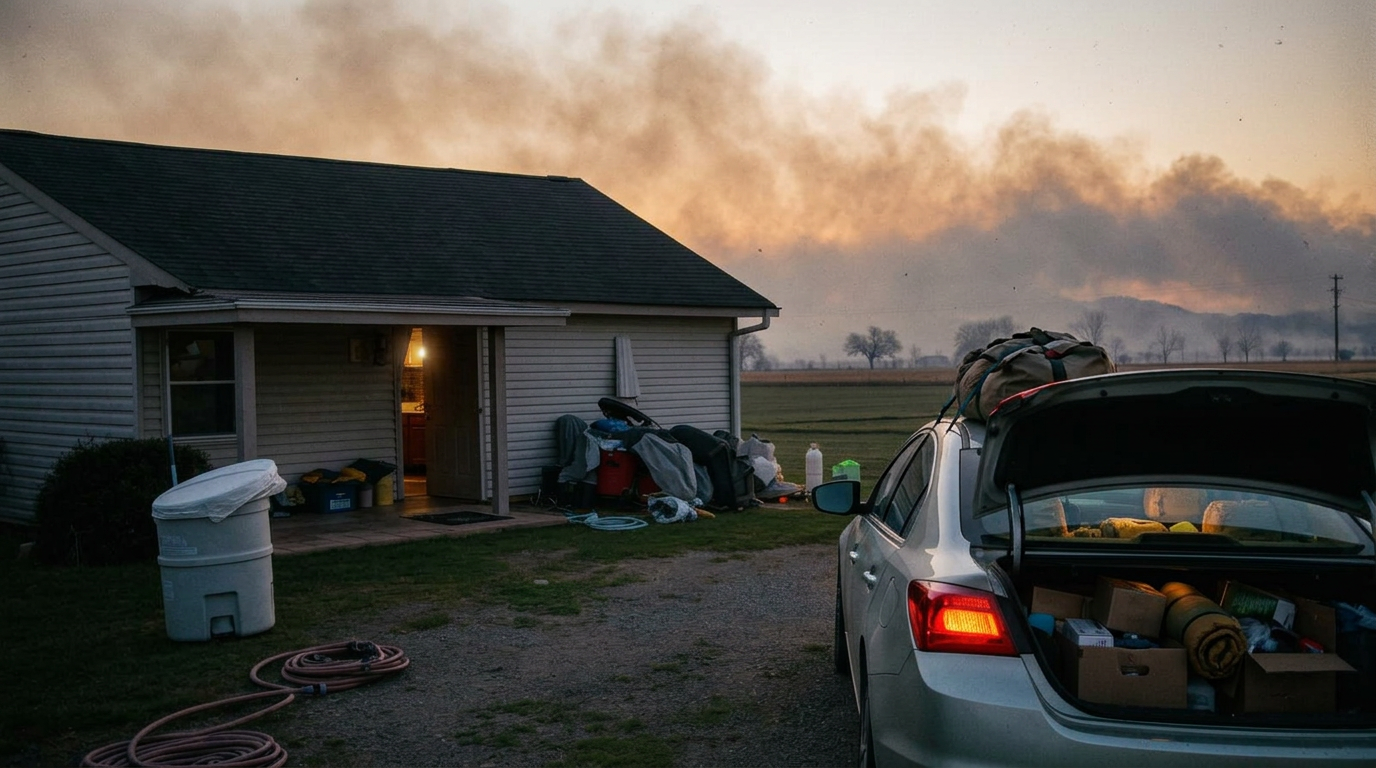 What to actually do in the last hourA wetting system is one line in a plan, not the plan. Here is the sequence we recommend to customers.7 min read
Work out what your own roof needs.
Open the configurator