
January 19, 2026 · 7 min read
What to actually do in the last hour
A wetting system is one line in a plan, not the plan. Here is the sequence we recommend to customers.
A system you start too late is a system that does not help. Damp surfaces need time — twenty to thirty minutes of running before the front arrives is the target, and longer in hot wind.
Start with the boring things at the beginning of the season, not on the day: clear gutters, cut back overhanging branches, move firewood away from walls, and check that every nozzle actually turns when you twist it. Salt, dust and spiders do more damage to a system in eleven quiet months than one fire does in an hour.
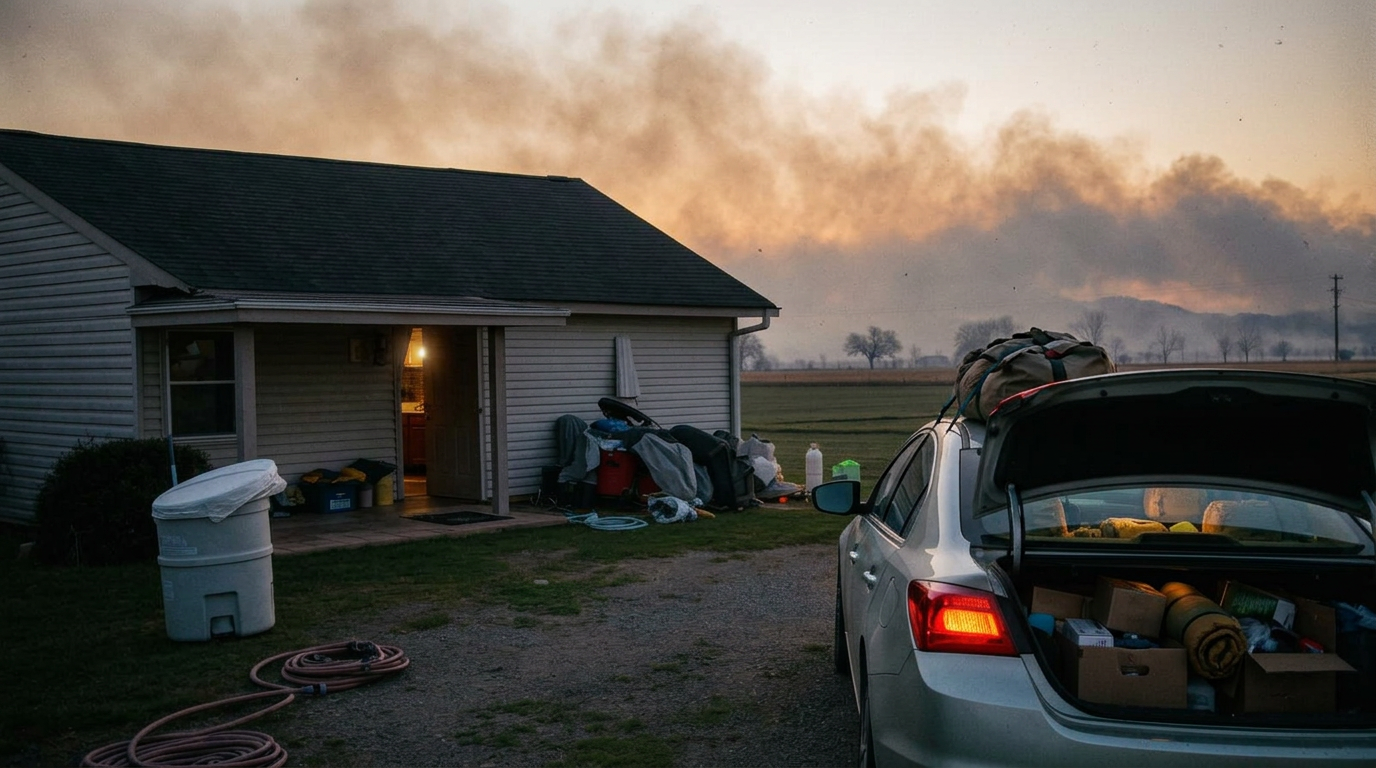
On a declared day, fill your tank, fuel the pump, and lay out hoses. When the warning escalates, run the system for five minutes as a test and watch every tap in turn. Then shut it down and wait. That test is the single highest-value thing you can do.
When the front is approaching, start the system, close windows and doors, and go. Systems with the remote module can be started from wherever you have evacuated to, which is exactly the point: nobody should be standing on a roof making decisions in an ember shower.
After the front passes, keep the system running for as long as your water lasts, and check the roof cavity and eaves if it is safe to return. Most late losses begin in a space nobody looked at.
Work out what your own roof needs.
Open the configurator