
Our mission
Defend the homes we love against wildfire
Two things at once. Today: a proven system that keeps the surfaces that matter damp, on your own house. Next: a decentralized network of thermal satellites, AI detection and low-cost drones that reaches an ignition while it is still small.
First
What already works
Most houses are not lost to a wall of flame. They are lost to embers landing in a gutter, on a deck, against a fence post — hours before or after the front passes. Damp surfaces do not ignite the way dry ones do. That is the whole idea, and it is not new: it is the oldest, most testable form of home hardening there is.
So we started where the evidence already is. EleHalo is designed to reduce ignition vulnerability, helps pre-wet vulnerable exterior surfaces, helps suppress landed embers and low-intensity spot fires, and adds an active layer to defensible space and home hardening. It installs on a normal 3/4" garden tap, by the people who live in the house.
Size a system for your houseSecond
What we are building
A wildfire needs minutes to reach a house. Conventional response needs hours to reach the fire. Wetting your own roof closes that gap from one end. We want to close it from the other — at the fire itself, in the window where it is still one hectare instead of ten thousand.
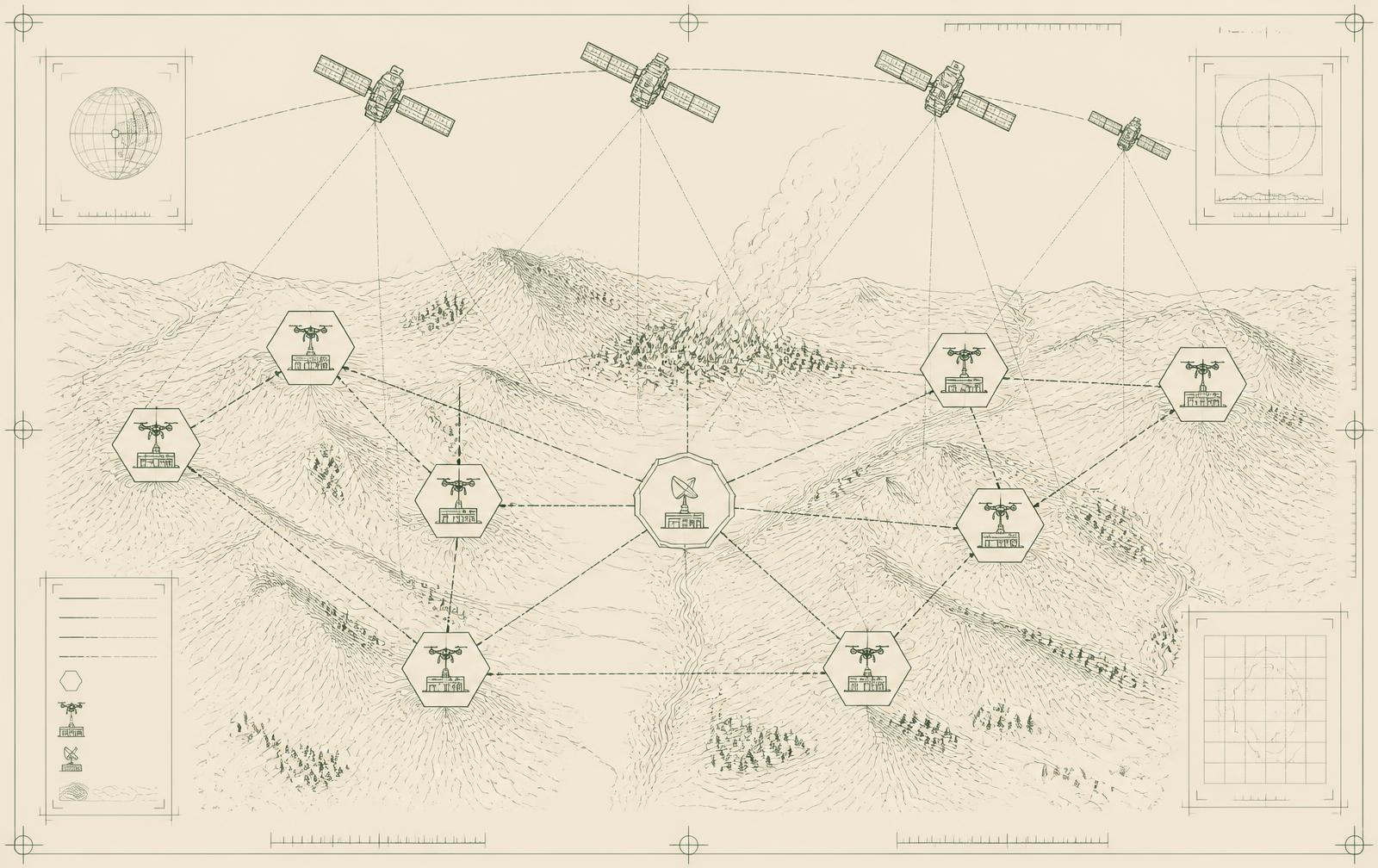
We call it a decentralized wildfire first response network: infrared and thermal camera satellites, AI detection, and fast off-the-shelf drones that analyse the fire and the vegetation around it and drop pods of flame-retardant liquid on the ignition — or ahead of it, in the path the fire is most likely to take.
Detection — satellites and sensors
Infrared and thermal satellite imagery, fixed camera towers, weather feeds and IoT sensors in the landscape, fused into one picture. No single source is trustworthy on its own: a dust plume, a warm rock face and a farmer's burn-off all look like fire. Together, weighted by a model trained on millions of ignition patterns, they flag a real fire in minutes instead of the hour it takes for someone to call it in.
Analysis — a drone gets there first
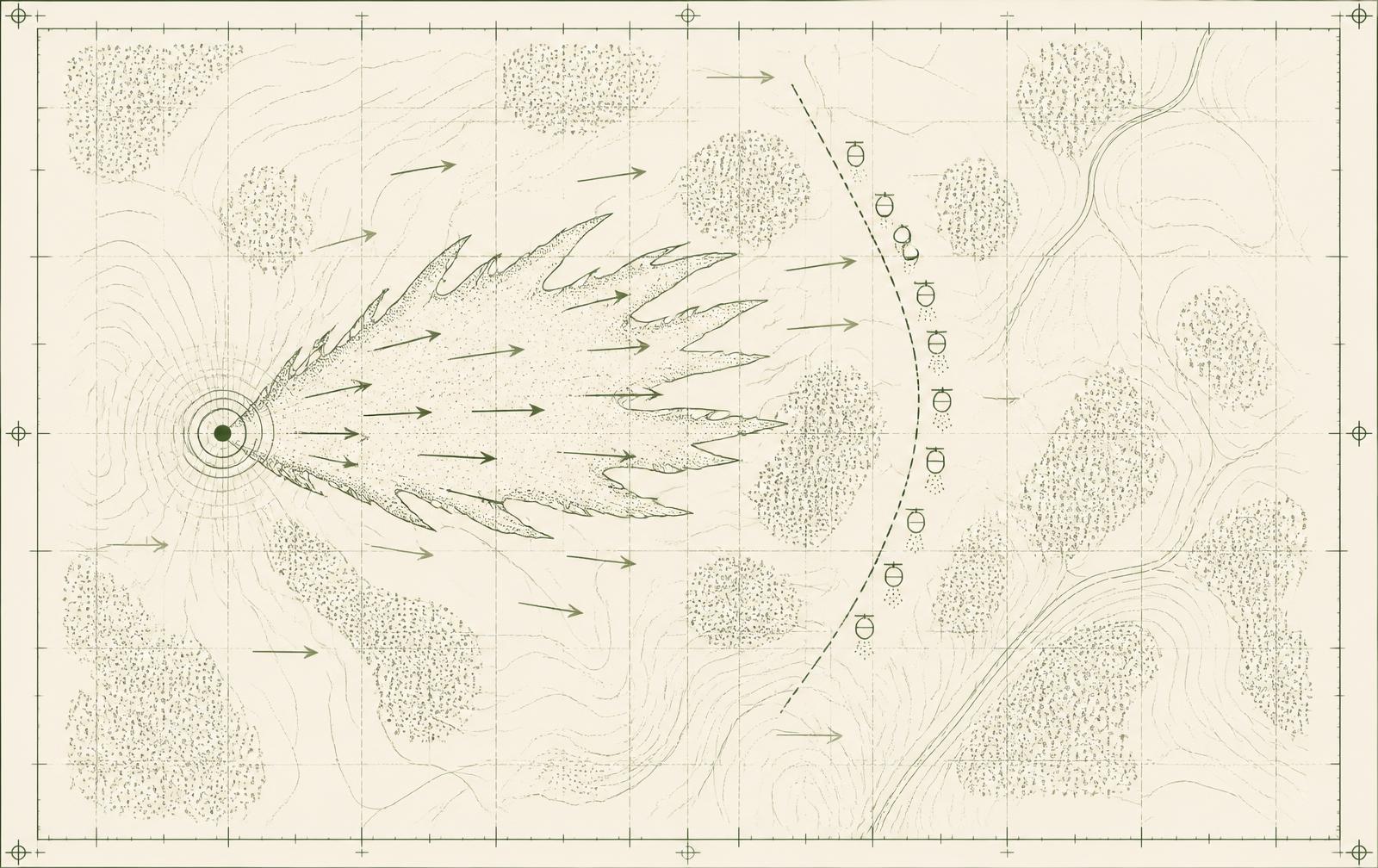
A reconnaissance drone launches automatically to the coordinates, without waiting for a human to approve it. It confirms whether there is a fire at all, maps the perimeter with thermal and optical sensors, reads the wind at altitude and the fuel and terrain the fire is about to move into, and produces a spread prediction: which flank matters, and where the fire will be in twenty minutes.
Response — pods, not tankers
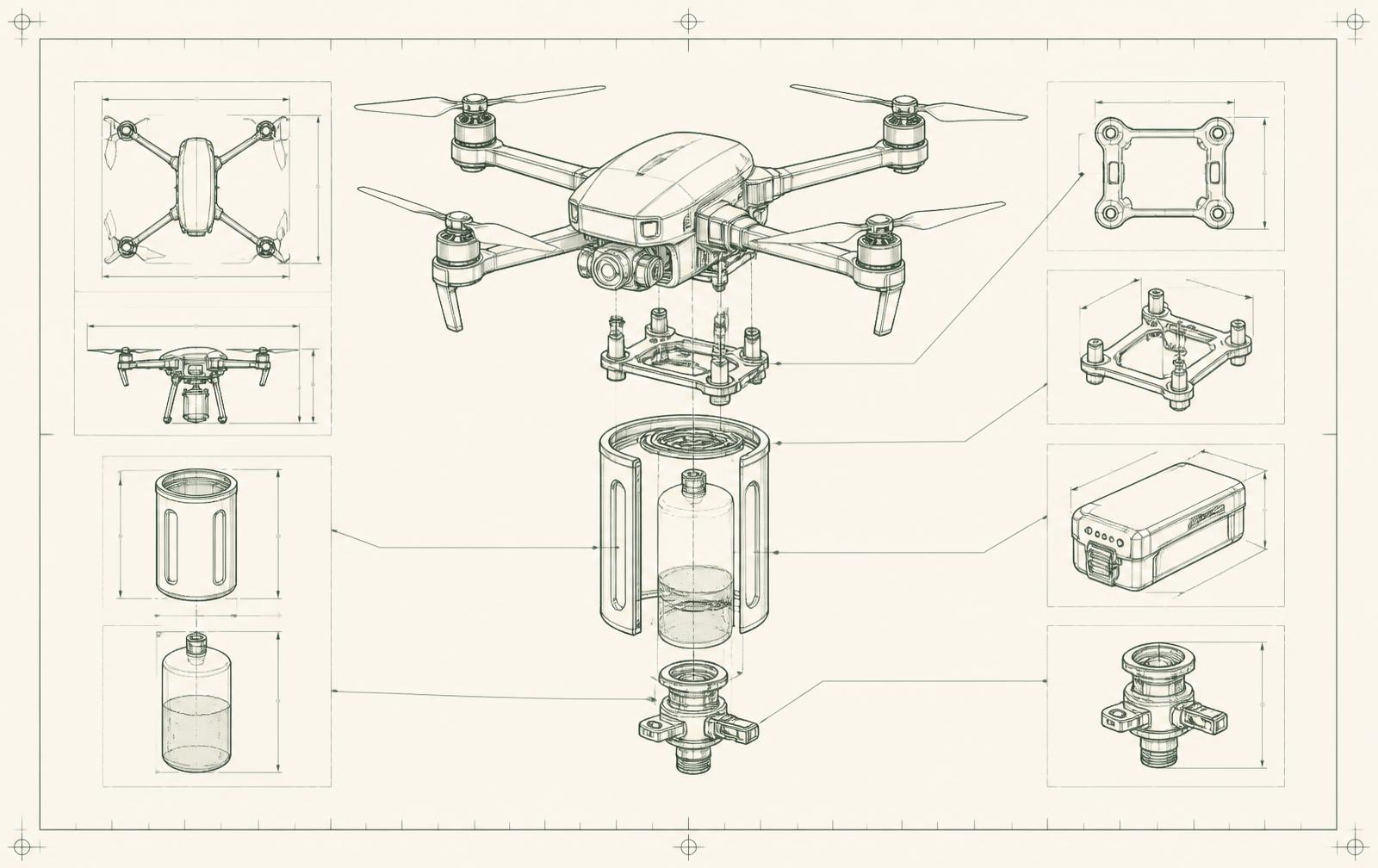
Suppression drones carry a simple payload: a lightweight pod holding flame-retardant liquid, a release valve and a standard mounting bracket. Pods drop directly on a young fire, or in a line across the predicted path to slow it. The goal is not to extinguish anything. It is to hold a flank and buy the twenty or thirty minutes that decide whether conventional crews arrive at a small fire or a large one.
The platform — an operating system for response
We are deliberately not building proprietary aircraft. Off-the-shelf drones are already good, already certified, and improving faster than any single company could match. What is ours is the layer on top: detection, dispatch, prediction and coordination — an open operating system that other initiatives, agencies, utilities and local volunteer networks can attach their own hardware and sensors to. Distributed, cheap, repairable, replaceable. A hundred modest units beat three irreplaceable ones.
What we will not claim
No system prevents a wildfire, and nothing on this page is a promise that your house will survive one. A wetting system shifts probabilities; it does not remove risk. A response network reduces how many fires reach the wildland-urban interface; it does not guarantee that none will. Leaving early is still the only thing that reliably protects people. We build for the margins, and we would rather say that plainly than sell certainty we do not have.
Start with the part that exists today
The configurator sizes a system for your own roof, edges and perimeter in a few minutes — nozzles, circuits, taps and tube, with nothing rounded in our favour.