
April 15, 2026 · 5 min read
Safety first — with or without a system
No roof-wetting system can guarantee survival. These six rules reduce your risk regardless of what you have installed.
It is natural to hope that a piece of equipment will tip the odds in your favour during a wildfire. A permanent wetting system can help, but it is never the first line of defence. The most reliable protection is a set of habits and preparations that work even if the power fails, the pump breaks or you are not home when the warning arrives.
Leave early when an evacuation order is issued. The single biggest factor in wildfire survival is whether people are still on the property when the front approaches. A roof-wetting system can be started remotely, but only if you are already somewhere safe. Decide your trigger for leaving before fire season, and leave hours earlier than feels necessary.
Clear leaves, needles and flammable mulch from gutters and within 10 metres of the house. Embers do not need much fuel. A gutter full of dry leaves can smoulder for twenty minutes before it flares. A woodpile against the wall, bark mulch under the deck, or dry grass against the eaves are all invitations. Walk the perimeter at the start of each season and remove anything that could catch.
Store firewood, gas bottles and spare fuel well away from walls and decks. Ten metres is a common guideline, but more is better if you have the space. A shed is not automatically safe either — if it is close to the house and full of dry timber, it becomes part of the problem. Treat anything combustible as something an ember can find.
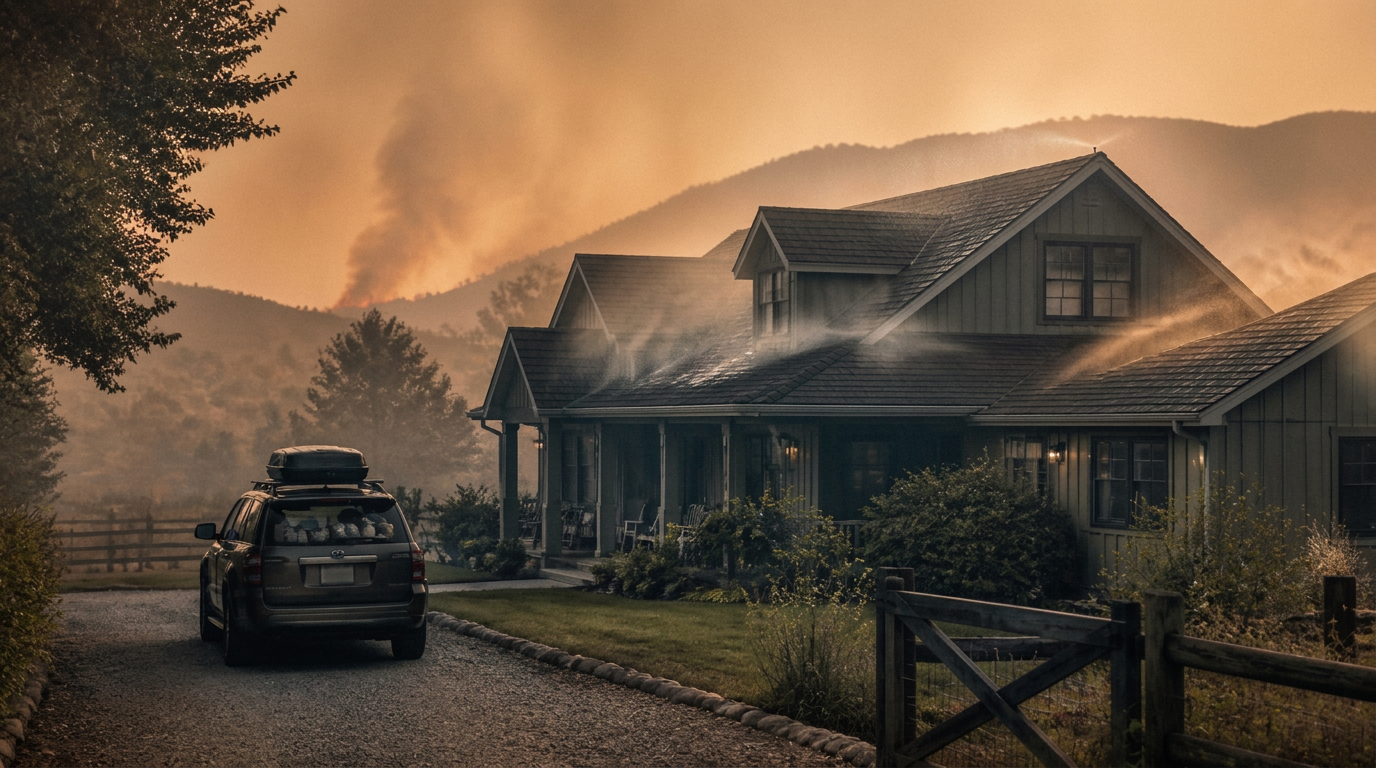
Keep emergency exits and driveways clear for fire trucks and for yourself. On the day, park vehicles facing out, close gates behind you, and make sure the driveway is wide enough for a tanker. If firefighters cannot reach your house, no sprinkler system will matter.
Prepare a go-bag and an evacuation plan before fire season. The plan should include where you will go, how you will get there, what you will take, and how you will confirm that everyone is accounted for. Practice it once. The moment a warning arrives is the wrong time to discover that a passport, pet carrier or medication is missing.
Sign up for local fire-warning alerts and check them on high-risk days. Many regions offer SMS, app or radio alerts that give you the extra hours that make evacuation calm instead of panicked. Do not rely on seeing smoke; by then you may already be in the window when leaving is dangerous.
EleHalo is designed to reduce ignition vulnerability, help pre-wet vulnerable exterior surfaces, help suppress landed embers and low-intensity spot fires, and add an active layer to defensible space and home hardening. It is an additional layer, not a replacement for any of the rules above. Get the basics right first, then let the system handle the embers you cannot reach.
Work out what your own roof needs.
Open the configurator