
March 11, 2026 · 6 min read
Why embers, not flames, take most houses
The fire front usually passes in under two minutes. The ember shower before and after it lasts hours — and that is what finds your gutters.
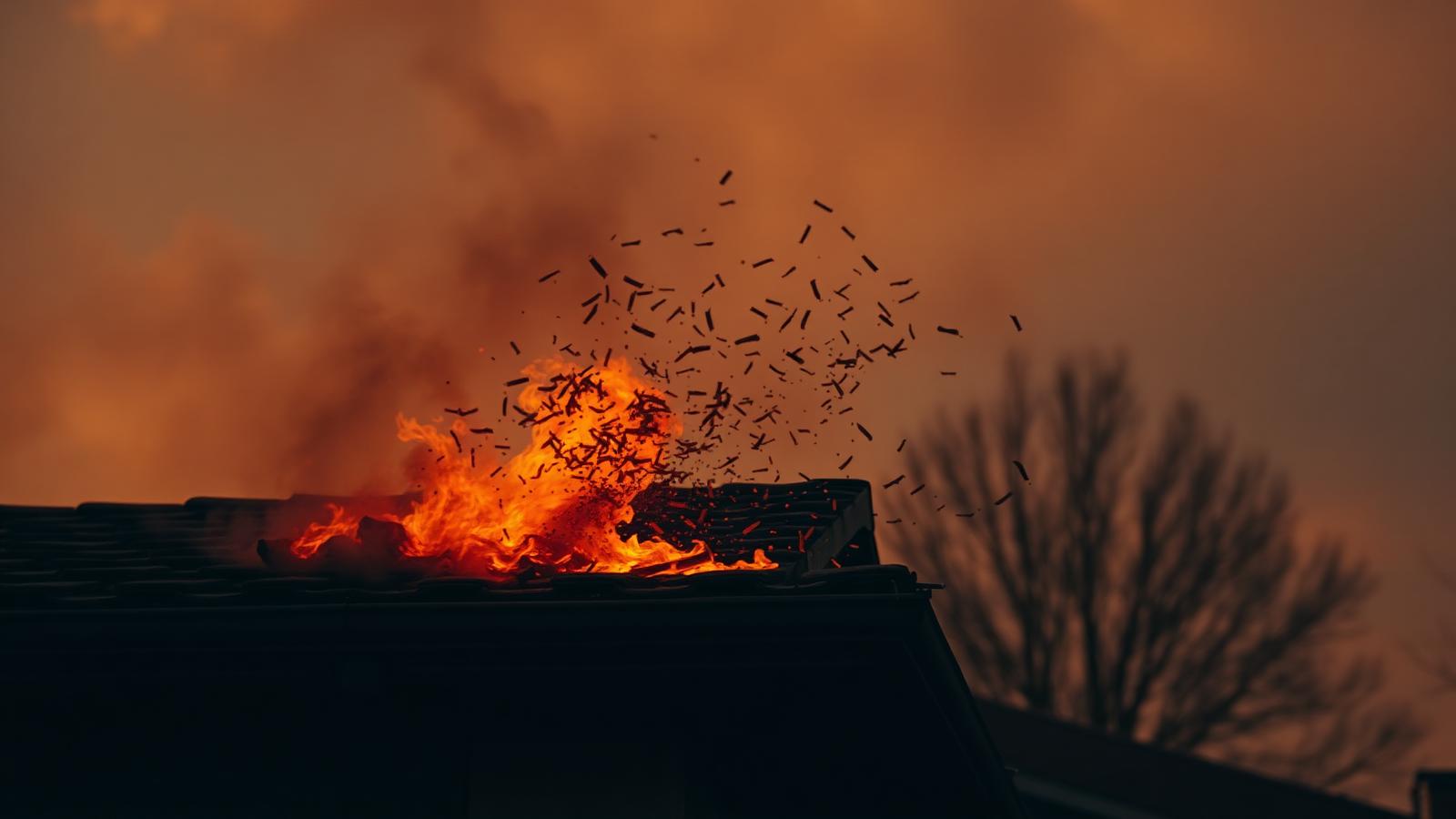
When people picture losing a house to a bushfire, they picture a wall of flame arriving at the fence line. In post-fire surveys, that is rarely what happened. The overwhelming majority of homes are lost to ember attack: burning fragments of bark, leaf and timber lofted ahead of the front, landing in gutters, on decks, against fence posts and in the tiny gaps where a roof meets a wall.
Embers are patient in a way flames are not. A single ember in a gutter full of dry needles can smoulder for twenty minutes before it finds enough fuel to flare. By then the front has passed, the sky has cleared, and everyone has relaxed. This is why so many houses are reported lost hours after the danger seemed to have gone.
A wetting system attacks the problem where it starts. Rather than trying to fight a fire front — which no domestic system can do — it keeps roof surfaces, gutters and perimeter materials damp during the hours when embers are landing. EleHalo is designed to reduce ignition vulnerability, help pre-wet vulnerable exterior surfaces, help suppress landed embers and low-intensity spot fires, and add an active layer to defensible space and home hardening.
The practical implication for how you design a system is important: coverage matters more than pressure or volume. A fine, even film across the whole roof plane beats a powerful jet on one section. That is the reasoning behind our nozzle spacing figures — one nozzle per two square metres of flat roof, one every metre along the edges of a saddle roof — and why one tap never carries more than 50 nozzles over 50 m of tube.
If you only take one thing away: plan for the ember shower, not the fireball.
Work out what your own roof needs.
Open the configurator