
July 20, 2026 · 7 min read
Fire resistant fencing — why your fence is a fuse to your house
A practical guide to fire resistant fencing: which materials burn, why a timber fence carries fire straight to a wall, and how to protect the fence line you already have.
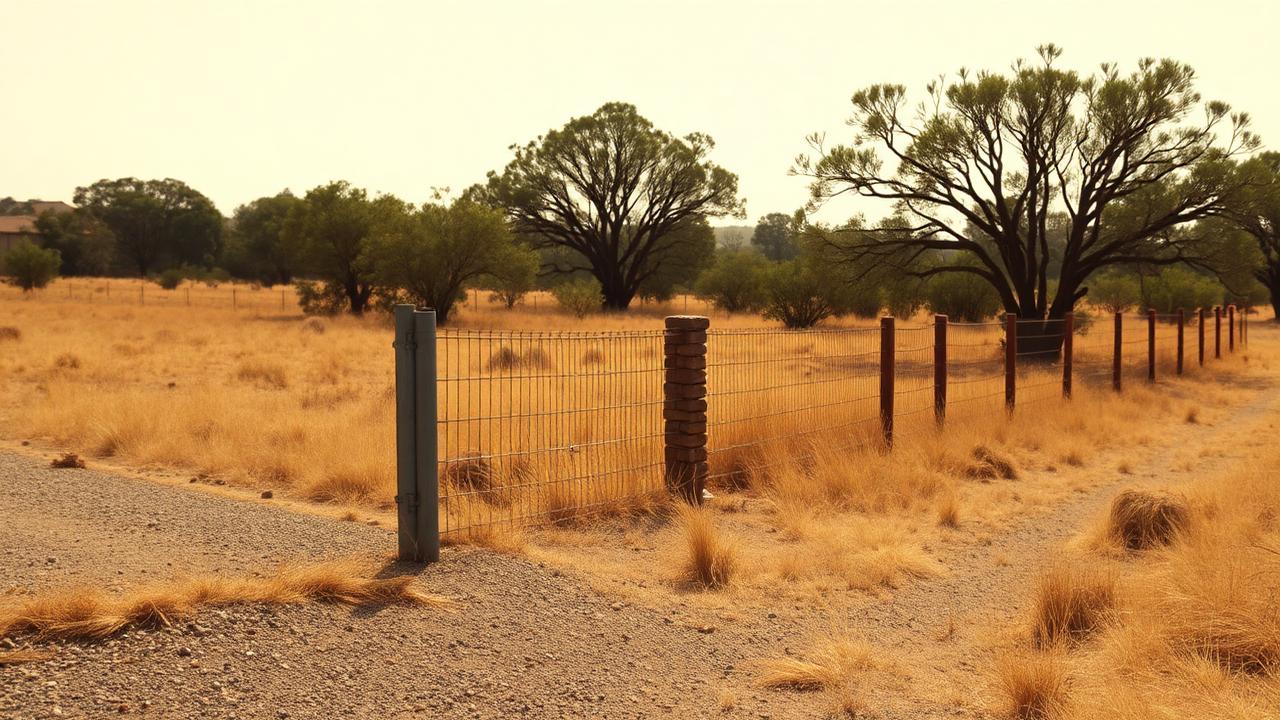
Most home hardening advice starts at the roof and works down. Fencing tends to be the last thing anyone thinks about, and it is one of the few structures on a property that physically connects the landscape to your walls. Fire safety agencies in high-risk regions — Fire Safe Marin among them — describe a combustible fence in exactly those terms: a fuse. Something ignites at the far end of the garden, the fence carries the flame along its length, and the fire arrives at the house with a continuous fuel path instead of a gap.
That is the mental model worth adopting. A fence is not a passive boundary. It is a linear fuel load, usually dry, usually elevated off the ground, usually running directly into a deck, a gate, a carport or a wall. A timber paling fence with a 60-metre run is 60 metres of kindling with airflow on both sides.
Which materials actually resist fire? Steel, aluminium, wrought iron and welded wire mesh are non-combustible and are the safest choice, particularly for the last five metres before the house. Masonry, brick, stone and concrete perform equally well and add radiant-heat shielding. Fibre cement and some composite panels are rated for reduced flammability, but check the specific product's rating rather than trusting the category. Vinyl and PVC do not carry flame like timber does, but they soften, warp and collapse under radiant heat, which means they stop functioning as a barrier at exactly the moment you need one.
The materials to avoid near a structure are the obvious ones: untreated timber palings, hardwood lap panels, bamboo and reed screening, and any fence with a dense hedge grown into it. Fire-retardant treated timber is better than untreated, but treatments weather. If it has been in the sun and rain for a decade, assume the treatment is largely gone.
If replacing an entire fence is not realistic — and for most properties it is not — the highest-value change is a targeted one. Replace the last section where the fence meets the house with metal or masonry, or simply remove that section and leave a gap. A non-combustible break of even 1.5 metres interrupts the fuse. Use a metal gate rather than a timber one. Keep the base of the fence clear of leaf litter, bark mulch and dry grass, because most fence fires start at ground level and climb.
Detail matters more than material choice on its own. Fences that sit hard against a wall transfer heat directly into cladding. Gaps under fence panels collect windblown debris that smoulders for a long time after the front has passed. Timber posts set in mulch beds are a common ignition point. Walk the fence line once a season and look specifically for places where something dry touches something structural.
There is also an active layer available. A fence line is one of the easiest things on a property to keep wet, because it is a straight run at a convenient height and it usually already sits near an outdoor tap. A perimeter run does exactly this: nozzles clipped along a fence, terrace border or mulch bed at one every 1.5 m, pointing outward as a defence line against incoming fire. One tap carries at most 50 nozzles and 50 m of tube, so a single tap covers roughly 50 m of fence line; a longer boundary is simply split across a second tap. Pre-wetting a fence line does not make timber non-combustible, but a damp fence and damp ground beneath it is a considerably worse place for a landed ember to start.
Sequence the work in the order that reduces risk fastest. First, clear debris along the whole fence line. Second, make the last stretch before the house non-combustible, or remove it. Third, replace higher-risk sections as budget allows. Fourth, add wetting along the runs that remain combustible or sit closest to the property boundary.
None of this is a guarantee, and we will not pretend otherwise. Fire resistant fencing, like everything else in home hardening, shifts probabilities rather than removing risk. EleHalo is designed to reduce ignition vulnerability, helps pre-wet vulnerable exterior surfaces, helps suppress landed embers and low-intensity spot fires, and adds an active layer to defensible space and home hardening. It does not replace leaving early, and no fence — however well built — will hold a running crown fire.
If you want to see what wetting your own fence line would take, the configurator will size it: find your house on the satellite map, trace the fence line as a perimeter run, and it works out nozzles, taps and tube for you.
Related articles
Safety practice and how the system itself is put together.
 Safety first — with or without a systemNo roof-wetting system can guarantee survival. These six rules reduce your risk regardless of what you have installed.5 min read
 Why embers, not flames, take most housesThe fire front usually passes in under two minutes. The ember shower before and after it lasts hours — and that is what finds your gutters.6 min read
 Flat roofs, saddle roofs, and the awkward ones in betweenWhy the same house can need three separate circuits, and how to break a complicated roof into elements the maths can handle.6 min read
Work out what your own roof needs.
Open the configurator